

Not Cold Enough
Ice cream soft, bread flexible, temperatures creeping up. Capacity, airflow and seals; see the warm freezer section.
A standalone freezer holds hundreds of dollars of food and fails quietly, in a garage or utility room, usually discovered by the soft ice cream. Freezer repair in Burleson covers chest, upright and garage freezers running warm, frosting over or running without pause, across 76028 and 76097.
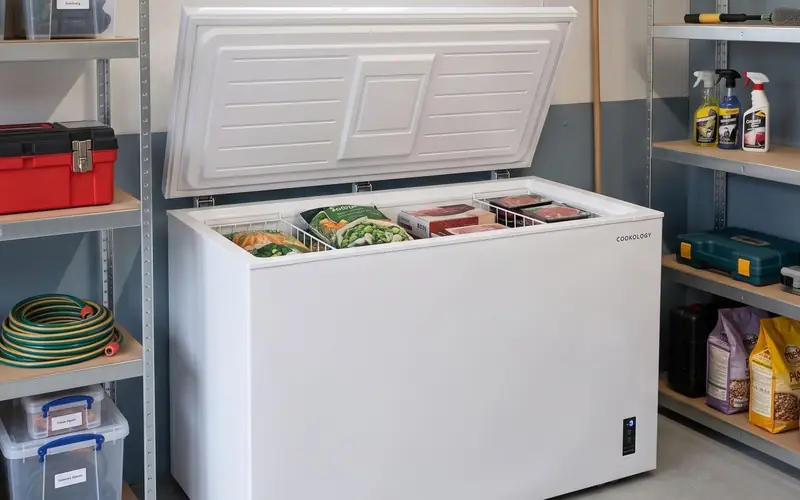
Call (619) 826-9631 for freezer repair anywhere in Burleson, TX. Chest and upright freezers that run warm, build heavy frost, cycle constantly or trip the breaker are diagnosed where they stand, in kitchens, utility rooms and garages across ZIP codes 76028 and 76097. If the problem is the freezer half of a refrigerator, the refrigerator repair page covers that machine.
Burleson’s garage freezers live the hardest life of any appliance in the city, and the summer pattern of their failures is so consistent it gets its own discussion below.
Freezers give few warnings. When one of these appears, the food clock is already ticking.
Ice cream soft, bread flexible, temperatures creeping up. Capacity, airflow and seals; see the warm freezer section.
Snow on the walls, packages frozen into one mass, the fan grinding against ice. Air leaks or a dead defrost system.
The compressor never rests and the cabinet sides feel warm. The machine is losing a fight against heat, a leak or its own wear.
Trips on start-up or mid-cycle, often on garage GFCI outlets. Start components, compressor draw and heater circuits.
A compressor trying to start and failing clicks in a rhythm; a dead-silent freezer has lost power, a control or the compressor itself.
Defrost water escaping instead of draining, common on uprights with blocked drains, and a slip hazard in a garage.
A freezer has one job, hold zero degrees Fahrenheit or below, and a small set of ways to fail at it. Work from the outside in. The environment: a unit packed wall to wall cannot circulate air, and the coldest spots sit at the back while food at the door warms; a lid or door that does not close fully, propped by a bulky package, dumps cold air all night; and placement matters more in Burleson than almost anywhere, since a freezer in an uninsulated garage in August is refrigerating against a room that can exceed the temperature its condenser was designed for.
The machine itself: the evaporator fan moves cold air off the coils, and when it fails or slows, temperatures stratify and rise. The defrost system keeps those coils clear; when its heater, thermostat or timer fails, frost insulates the coils and cooling fades over days, often with the fan audibly clipping ice. The condenser coils, on many freezers built into the cabinet walls, shed heat through the sides, which is why the cabinet feels warm and why a unit shoved tight into a corner or buried under stored boxes overheats.
The thermostat or electronic control can simply misread, cycling the compressor off too early. And at the end of the line, the sealed system: a compressor losing capacity, or a slow refrigerant leak, produces the freezer that runs forever, sounds normal, and never quite gets cold. That pattern, constant running with mediocre cold, is the one to report most precisely, because it points past every cheap part to the expensive heart of the machine.
Practical steps while you decide: put a thermometer in the freezer rather than trusting the dial; check the lid or door closes on its own and the gasket grips a sheet of paper all the way round; leave a couple of inches of breathing room at the sides. If temperatures sit above the safe zone after those checks, move the highest-value food to a cooler with ice or a neighbour’s freezer, and call (619) 826-9631. Say where the freezer lives, kitchen or garage, and how the failure announced itself; both facts genuinely shorten the diagnosis.
Standalone freezers multiply across Burleson for good reasons: bulk buys, deer leases and hunting season in the autumn, gardens and farmers market hauls, and big families in the subdivisions who treat a garage chest freezer as a second pantry. Those garage units then face the hardest working conditions of any appliance in the house. Summer garage temperatures in Johnson County push past what many freezers were designed around, so compressors run long, condenser walls bake, and marginal parts pick July to fail.
The seasonal pattern is consistent: a freezer that coped all spring starts losing ground in the first heat wave, frost patterns change, the compressor note gets longer and more strained, and food at the top and door goes first. Catching that slide early matters, because a fan or defrost fault fixed in June is a small job, while a compressor cooked by months of non-stop running is the end of the machine.
Power events add a Burleson footnote. Summer storms knock power out across neighbourhoods, and a freezer full of food survives an outage far better closed than opened; resist checking. When power returns, freezers that fail to restart often have a start relay or control upset by the surge rather than a dead compressor, a distinction worth a diagnosis before any replacement talk.
Whether yours lives in a Mountain Valley garage, a utility room in Heritage Village or a kitchen in Old Town, coverage is the same citywide service on the same number. For the freezer section of a fridge-freezer combination, start with refrigerator repair; for ice makers that live in freezers, see ice maker repair.
The freezer is diagnosed in place, food and all, starting with temperature truth rather than the dial’s opinion.
Actual cabinet temperature is measured, frost patterns on the coils are read like a logbook, and the compressor’s running pattern is timed against the set point.
Evaporator and condenser fans, defrost heater and thermostat, the temperature control and start components are each tested, and the gasket seal is checked around its full perimeter.
After the fix, the freezer runs and its temperature is watched falling toward zero, with any frost cleared and the drain confirmed flowing, before the food goes back in an organised way.
Manual-defrost chest freezers, the simplest and longest-lived appliances in the city, and frost-free uprights with their fans and defrost systems, plus garage-ready models from Frigidaire, GE, Whirlpool, Maytag, Kenmore, Samsung and Insignia-style store brands. The model plate is usually inside the lid or on an inner wall of a chest unit, and on the door frame or side wall of an upright.
Freezers split cleanly. Fans, thermostats, defrost parts, gaskets, hinges and start gear are all reasonable repairs on a sound cabinet. A failed compressor or a sealed-system leak on an older unit usually fails the maths, and you will be told so straight, in line with the repair or replace guide. Food value cuts both ways: a freezer protecting a season of venison justifies faster decisions, not bigger ones.
Look in the garages along any Burleson street, from the established homes near Warren Park and Chisenhall Fields to the newer builds in Shannon Creek and Prairie Timbers, and chest freezers are everywhere. They serve hunters, bulk shoppers, big families and the cooks who put up produce all summer. Landlords rarely own them, but tenants do, and a dead freezer in a rental is still a same-number call for the household.
Every neighbourhood in 76028 and 76097 is covered, on both the Johnson County and Tarrant County sides of the city.
See the full service area →Cold storage and the rest of the kitchen:
Refrigerator repair in BurlesonWork through the environment first: a freezer packed so tightly that air cannot circulate, a lid or door not sealing, or a garage unit fighting extreme Burleson summer heat will all run warm. Beyond that, the causes are a failing evaporator fan, frost-choked coils from a defrost fault, a weak thermostat, or a compressor and sealed system losing capacity. If ice cream is soft after the simple checks, call (619) 826-9631.
Frost is moisture that got in and froze. On a manual-defrost chest freezer, some build-up over months is normal life. On a frost-free upright, heavy frost means either warm air is leaking past a door gasket or a door left ajar, or the automatic defrost system, heater, thermostat or timer, has failed and stopped clearing the coils. Frost packed around the back panel with the fan noisy or stopped is the defrost system until proven otherwise.
A freezer runs constantly when it cannot reach its set temperature or thinks it has not. Dirty condenser coils, a failed condenser or evaporator fan, a leaking gasket feeding it warm air, a faulty thermostat or control, and low cooling capacity from a tiring compressor all produce the same symptom. In a hot garage some long running is expected in August; running without pause in a cool kitchen is a fault.
A breaker trip on start-up points at the compressor or its start components drawing too much current; a trip part-way into the cycle can involve the defrost heater circuit. Note whether it trips the instant the compressor tries to start or later in the cycle, and whether the garage outlet is a GFCI, which ages into nuisance trips. Do not keep resetting and forcing it to run; call (619) 826-9631.
Plenty do, and garage-rated models are built for the temperature swings. The honest limits: in peak summer a garage freezer works far harder, runs longer and wears faster, and in a rare hard freeze some fridge-freezer combinations in garages misbehave because their thermostat watches the fridge section. If your garage freezer struggles every summer, that pattern is worth mentioning on the call; it shapes both the diagnosis and the repair or replace advice.
Chest freezers are simple, long-lived machines, and fans, thermostats, lids seals and start components are all sensible repairs. The hard case is a failed compressor or a refrigerant leak in the sealed system on a well-used unit, where the numbers often stop working. You will be told plainly which side of that line your freezer is on when you call (619) 826-9631.
Call now, say where the freezer lives and what the food is doing, and get the visit planned while there is still food to save.
Call (619) 826-9631