

Fridge Warm, Freezer Cold
The classic airflow fault. The freezer makes the cold and a fan moves it across; when the fan, damper or defrost system fails, the fresh-food side warms first. Covered in detail in the not cooling section below.
A refrigerator that stops cooling puts a whole kitchen on a clock. Refrigerator repair in Burleson covers warm fridges, leaking freezers, heavy frost, strange noises and compressors that never rest, on every major brand and every style of unit, in homes across 76028 and 76097.
Call (619) 826-9631 for refrigerator repair anywhere in Burleson, TX. Cooling failures, leaks, frost build-up, ice maker problems and noisy or non-stop compressors are diagnosed in the home across ZIP codes 76028 and 76097. While you wait, keep the doors shut and move perishables to a cooler with ice if the fridge section is clearly warming.
The most common Burleson call is a fridge that warms while the freezer still feels cold. That pattern usually means airflow, not the compressor. The sections below explain the main faults and the checks worth doing before you call.
Refrigerators fail in a handful of recognisable ways. Match your symptom below; each one points at a different part of the machine, and describing the right symptom on the call speeds up everything that follows.
The classic airflow fault. The freezer makes the cold and a fan moves it across; when the fan, damper or defrost system fails, the fresh-food side warms first. Covered in detail in the not cooling section below.
When the freezer warms too, the problem sits deeper: condenser coils choked with dust, a condenser fan out, a start relay failing, or the compressor and sealed system themselves. This one should not wait.
Puddles under the crisper drawers, water on the kitchen floor, or ice sheeting across the freezer floor. Drains, pans, water lines and door seals are the usual suspects; see the leaking section.
Snow packing the freezer walls and vents means the defrost system is not melting it away: a failed defrost heater, thermostat or timer. Left alone, the frost strangles airflow and the fridge side warms next.
A fridge that never cycles off is working against something: dirty coils, worn gaskets letting in humid Burleson air, a dying fan, or cooling loss it cannot make up. It is also a fridge wearing its compressor out early.
Clicking at the back often means the compressor is trying and failing to start. Buzzing can be a fan meeting ice. Rattles are sometimes just a loose drain pan, and worth distinguishing from the expensive noises.
Start with how a modern refrigerator works. In nearly every model in Burleson homes, only the freezer contains the evaporator coils. A small fan, the evaporator fan, blows that freezer-cold air through a vent or damper into the refrigerator section. The fridge temperature control really controls how much of that cold air it receives. That is why so many cooling complaints are one-sided: the cooling plant is fine, but the air is not arriving.
The causes, in rough order of how often they show up: vents inside the fridge blocked by food pushed against the back wall; the evaporator fan motor failing or its blades iced solid; frost from a failed defrost cycle blanketing the coils so no air can pass; the damper door stuck shut or its control failing; and a thermostat or sensor misreading the temperature so the machine thinks it is cold enough. Each has a different fix, and none of them starts with replacing the refrigerator.
Checks worth doing yourself: confirm the controls sit at their normal settings, around the manufacturer’s marked midpoint rather than cranked to maximum; make sure no bag of frozen food is plastered over the freezer’s rear vents; listen for the fan with the freezer door open and the door switch pressed, it should spin up; and look at the door seals with a torch at night or a paper test, a seal that lets a sheet of paper slide out easily is leaking cold air all day.
When both compartments warm together, think heat rejection and the sealed system instead. The condenser, under the unit or at the back, sheds the heat pulled from inside. Burleson homes with dogs and cats choke those coils with hair fast, and a fridge pushed tight against a wall in a hot Texas kitchen works harder still. A failed condenser fan, a weak start relay clicking every few minutes, or a compressor that runs hot and shuts down all produce the same slow warm-up.
Call (619) 826-9631 when the fridge has been warm for several hours despite the simple checks, when you can see heavy frost, when the compressor clicks without starting, or when food safety is becoming the issue. Mention which side is warm, whether the fan runs and whether you can see frost; those three answers aim the visit at the right parts from the start.
If the ice maker has also quit, that is consistent with a freezer running a few degrees warm; ice makers stop cycling before food feels soft. The dedicated ice maker repair page covers faults that are truly in the maker itself.
Every refrigerator makes water. Each defrost cycle melts frost off the coils, and that water is supposed to run down a drain at the back of the freezer, through a tube, into a pan underneath where it evaporates. When water shows up in the crisper drawers, as a sheet of ice on the freezer floor, or as a puddle spreading across a Burleson kitchen, some part of that route has failed.
The most common failure is the drain itself: a pea, a shard of ice or a build-up of grime blocks the tube, and defrost water backs up and spills into the cabinet instead. Next come the water lines for in-door ice and water dispensers, which run through the door hinge and behind the unit; a cracked line or a loose fitting at the inlet valve drips steadily and is often blamed on the fridge’s plumbing long before the real source is found. A cracked drain pan, a fridge that is not level so water runs forward instead of back, and door seals letting humid air condense inside round out the usual list.
Where the water appears is the best clue. Water under the front of the unit suggests seals, the dispenser line or a forward-tilting cabinet. Water at the back points to the inlet valve, the supply line or the drain pan. Water inside the fridge, under the drawers, is the blocked defrost drain until proven otherwise.
While you wait for the visit, mop up standing water to protect the floor, especially the wood and laminate floors common in Burleson’s newer subdivisions, and if the leak is clearly from the water line, close the small supply valve behind the fridge or at the sink. Then call (619) 826-9631 and describe where the water shows up.
Diagnosis happens in your kitchen, with the fridge in place. Here is how a visit usually runs, so you know what to expect when you call.
Both sections are temperature-checked, the fan and damper are tested, and the coils are inspected for frost patterns. The pattern of what is cold and what is not decides where the fault hunt goes next.
Suspects get tested rather than guessed: fan motors, defrost heaters and thermostats, sensors, start relays and controls are metered, and the door seals and drains are checked by hand. You hear what failed and why.
With the failed part replaced and any frost cleared, the machine is run and temperatures are watched back toward normal before the job is called done, so the fix is proven in the home.
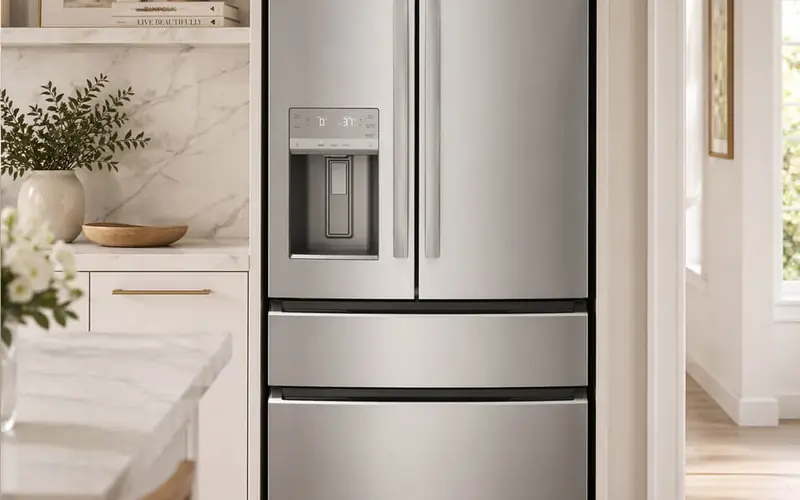
French-door models with bottom freezers dominate Burleson’s newer kitchens, and their twin evaporators and in-door ice systems are covered, as are side-by-side units, traditional top-freezer models and the fridge-freezers in garages and rental properties. Brand coverage follows the local installed base: Samsung and LG smart fridges with inverter compressors and error codes, Whirlpool, GE and Maytag workhorses, KitchenAid and Bosch built-ins, and Frigidaire, Kenmore and Electrolux units. Have the model number from the label inside the fridge wall ready when you call.
Fan motors, defrost parts, seals, sensors, drain work and start relays are the bread and butter of refrigerator repair, and on a unit with years of life left they are almost always worth doing. The conversation changes with a failed compressor or a leaking sealed system on an older fridge, where the repair approaches the value of the machine. You will be told plainly which side of the line your unit sits on, using the same reasoning as the repair or replace guide, and the factors that drive repair cost are published on this site too.
Texas heat is the background of every refrigerator fault here. A fridge in a Hidden Creek kitchen works against a warm house all summer; a second fridge or freezer in a Mountain Valley garage works against a space that can pass a hundred degrees, which is why garage units fail in July and August more than any other months. Summer also brings the opposite problem: doors opened constantly by kids home from Burleson ISD schools, seals worked hard, ice makers running flat out.
Calls come from every part of the city: Old Town homes with older top-freezer units, the subdivisions along Alsbury Boulevard and Hidden Creek Parkway with their French-door fleets, rentals near Hill College where a fridge failure is a landlord emergency, and the northern streets of 76097 toward the Tarrant County line. Same number, same service, everywhere inside the city.
See the full service area →Freezer side beyond saving on its own unit? Ice maker dead while the fridge cools fine? Start with these:
Freezer repair in BurlesonOn most models the freezer does the cooling and cold air is pushed into the fridge section by a fan. If the evaporator fan fails, the damper sticks shut or the coils frost over and block airflow, the freezer stays cold while the fridge warms up. Check that vents inside the fridge are not blocked by food, then call (619) 826-9631 if temperatures do not recover within a few hours.
Food safety guidance is to treat perishables cautiously once the fridge rises above refrigerator temperatures for more than a few hours. Keep the doors closed to hold the cold, move the most perishable items to a cooler with ice, and call (619) 826-9631 promptly: the sooner the fault is found, the more food you save.
The usual causes are a blocked defrost drain, a cracked drain pan, a leaking water line to the ice maker or dispenser, or door seals that let humid Texas air in to condense. Note where the water appears, front or back, inside or underneath, and mention it when you call; the pattern points at the cause.
Often, yes. Non-stop running is frequently caused by dirty condenser coils, a failing condenser fan, worn door seals or a defrost fault, all of which are repairable. It becomes a replacement conversation mainly when the compressor itself or the sealed system is failing on an older unit. Call (619) 826-9631 and describe the symptoms for a straight assessment.
Yes. Refrigerator repair in Burleson covers French-door, side-by-side, bottom-freezer and top-freezer models, including in-door ice and water dispensers. Samsung, LG, Whirlpool, GE, Maytag, KitchenAid, Frigidaire, Bosch, Kenmore and Electrolux models are all covered.
Keep the doors shut as much as possible, move perishables to a cooler with ice if the fridge is clearly warming, and note the model number from the label inside the fridge wall. Avoid turning the temperature controls to their coldest setting for hours at a time; it rarely fixes the fault and can freeze the coils harder. Then call (619) 826-9631.
Every hour matters with a cooling fault. Call now, describe which side is warm, and get the visit planned.
Call (619) 826-9631